Category: Blog

  • Distraction-Free Writing Device: Buy a Modern Typewriter

    Distraction-Free Writing Device: Buy a Modern Typewriter

    Interested in distraction-free writing? See what DEUX Writer is, who it suits, how it fits next to your laptop and how ordering works. No pressure.

    Distraction-Free Writing: DEUX Writer, Honestly Explained

    You know the feeling of a blank page and a clear head. If you want to buy a modern typewriter, you probably want that feeling back: a device that lets you write and does nothing else. For us, that is what distraction-free writing is about. DEUX Writer is our version. It pairs the feel of a classic typewriter with an E-Ink screen made for long sessions. This page gives you what you need to decide: what it is, who it suits, how it fits next to your laptop, and what happens when you order. No countdowns, no pressure.

    What do you get with DEUX Writer?

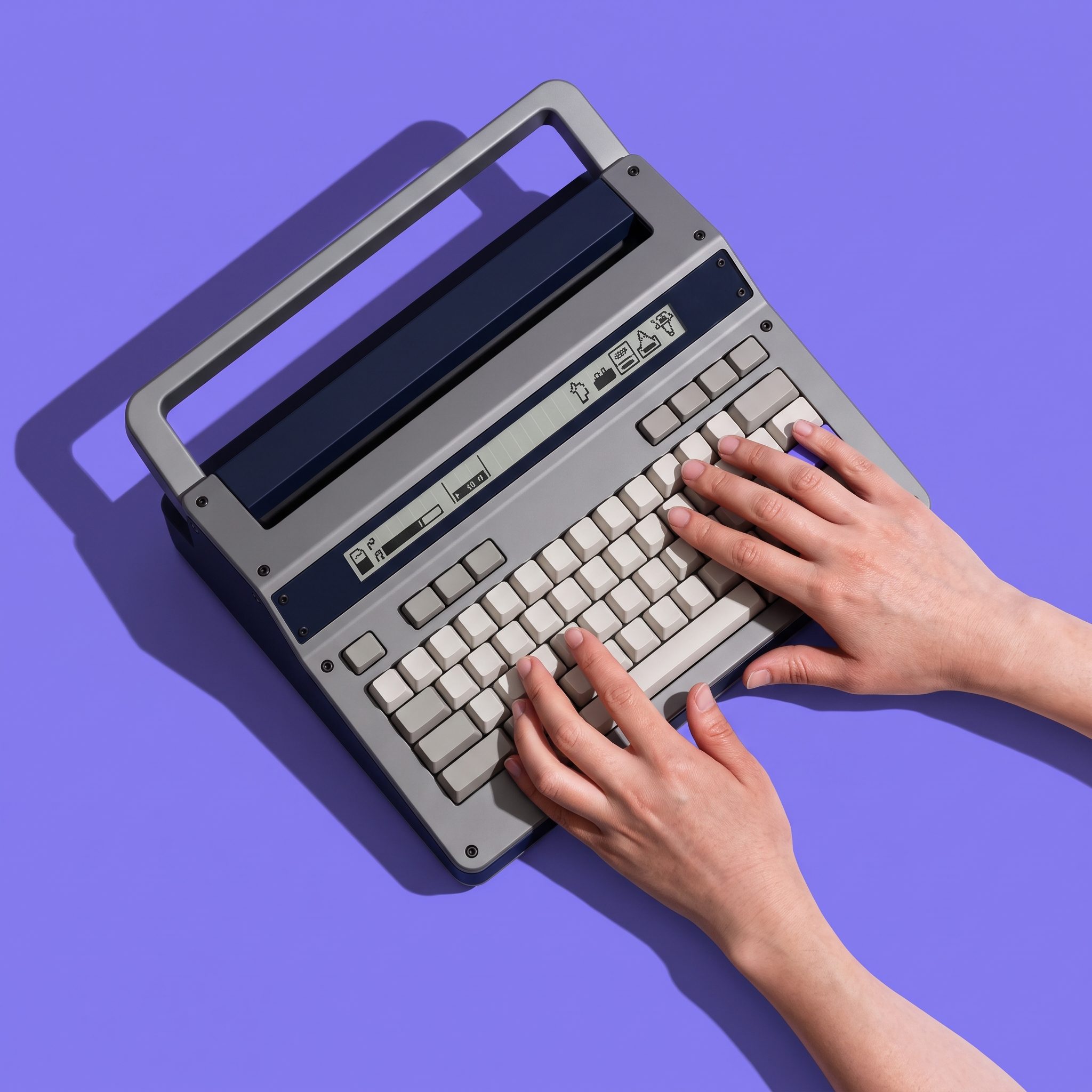
    You get a digital typewriter with a mechanical keyboard and an E-Ink screen, and nothing else on it. No browser, no feeds, no notifications. You open it, and the page is there. Early reviewers describe the keys as satisfying and the screen as easy on the eyes, even after several hours of writing.

    DEUX Writer comes with 32 GB of storage and up to 14 days of battery life. It works completely offline, with no internet access or notifications, and connects via USB-C when needed. The E-Ink display and physical keyboard are built around one purpose: writing.

    Is DEUX Writer right for you?

    Take a minute to check.

    It is a good fit if:

    1. You draft a lot. Essays, chapters, lyrics, scripts or long emails. You want to get the words out first and fix them later.
    2. You lose time to tabs. You sit down to write and end up in your inbox.
    3. You like a tool with a feel. The sound and resistance of the keys matter to you.
    4. You write in more than one place. The train, a café, a park or your kitchen table, with no outlet and no inbox.

    It is probably not for you if your work is mostly editing with heavy formatting, research in many tabs, or collaboration in shared documents. For that, your laptop is still the right tool. Many writers use both: Writer for drafting, laptop for finishing.

    Try it first, for free. Before you buy anything, run a one-week test. Three times this week, write for 45 minutes with your laptop offline and only a plain text editor open. If you finish more, or the writing feels easier, you already know the answer. If nothing changes, you have saved yourself the money.

  • Minimalist Phone for Creatives: How to Choose One That Lasts

    Minimalist Phone for Creatives: How to Choose One That Lasts

    By Mira Lund & Jonas Bech

    You make things, and you already know your phone works against you. You have tried the workarounds. What you want now is a distraction free phone that works as a better tool, and you do not want to buy the wrong one twice. This guide helps you choose a minimalist phone for creatives: what to compare, what it really costs over time, and where DEUX One fits. We built it, so we will be direct about who it is for and who it is not.

    What should a phone do for creative professionals?

    Four things: reach people, find the way, note an idea, and then stop. A musician needs the venue address and the bandmate’s message. A photographer needs the route to the location. A writer needs somewhere to catch a line.

    Nothing on that list needs a feed. Everything else is optional, and optional is where the attention goes.

    What is a minimalist phone?

    You probably know the category. A minimalist phone or dumb phone keeps the essentials and cuts the feeds, the app store and the constant pull. The useful question is not “how little does it do?” but “does what is left serve my work?”

    How to compare minimalist phones:

    1. Purpose. Can the maker say in one sentence what it is for?
    2. Screen. Calm and simple displays make it easier to stay with a task.
    3. What is left out. The list of missing features tells you more than the list of included ones.
    4. Cost per year. Divide the price by the years you will realistically keep it. A phone you keep six years can cost less per year than one you replace every two.
    5. Fit with your day. Check the three or four apps you truly cannot live without. If they matter, test them against the phone before you commit.

    Is a distraction free phone right for you?

    Dieter Rams called it “less, but better.” We take that literally. DEUX One has an E-Ink display, is built around the essentials and leaves out the feed. There is nothing to open, so there is nothing to resist. We design it to be kept for years, which is why we encourage you to judge it by cost per year, not by sticker price.

    Who DEUX One is for:

    • You have a practice, not just a phone. You write, record, shoot, design or build, and some part of your week depends on long stretches of unbroken attention.
    • You already know where your phone costs you. The studio session that drifted into a feed. The edit you left to check one message. You do not need convincing. You need a tool that stops it from happening.
    • You use your phone for a short list of things. Calling, messaging, finding your way, and noting an idea before it disappears. If you can write your essential list on one hand, you are the person we built it for.
    • You would rather own fewer things and keep them. You think in cost per year, not in sticker price, and you want a device that earns its place over time.
    • You like a limit. You do not see “it does less” as a flaw. You see it as the point.

    Who DEUX One is not for:

    • You need a long list of apps to do your work. DEUX One is built around the essentials. If your income runs through many apps, keep a smartphone, or test the apps you rely on before you commit.
    • You want your phone to entertain you. Video, games and endless scrolling are exactly what we left out.
    • You want fast, fluid scrolling. E-Ink is calm by design. It is not built for speed.
    • You want the lowest price today. DEUX One is made to be kept for years, so it is cheaper per year than per purchase. If the sticker price is what matters most, another phone will suit you better.

    If that sounds like you, a smartphone is the honest answer. If you are not sure, write down your essential list first and see how much of it the phone covers.

  • Screen Time and Focus: What the Research Shows, and What Is Still Debated

    Screen Time and Focus: What the Research Shows, and What Is Still Debated

    By Mira Lund & Jonas Bech

    You do not need another article telling you to put your phone down. You need to know what the evidence actually supports. The research on screen time and focus is real, but it is messier than the headlines suggest. We are Mira and Jonas. We worked as developers before DEUX, and we have read this research for years because it shapes how we build. Below you will find what the studies measured, where the findings are strong, where they are contested, and what we would do with them if we make things for a living.

    Does screen time hurt focus?

    Interruptions clearly do. Screen time as a whole is harder to pin down.

    Gloria Mark, a researcher at UC Irvine, has tracked how long people stay on one screen. Her first study found an average of two and a half minutes. By 2020, the average was 47 seconds. She also reports that recovering from an interruption can take almost half an hour. These numbers come mostly from observing office workers, so they describe work at a computer and not every kind of screen use.

    That is exactly what Cal Newport calls the enemy of deep work: long, unbroken stretches on one demanding task.

    What is kinetic attention?

    Kinetic attention is Mark’s term for attention that keeps moving between screens and tasks. It describes a pattern where attention is neither fully present nor fully absent. It is a description of behaviour, not a diagnosis, and 47 seconds is an average from the studies, not a clock in your head.

    Does a phone on your desk cost you focus, even when you ignore it?

    One well-known study says yes. In 2017, Adrian Ward and colleagues ran experiments with nearly 800 smartphone users. They found that the mere presence of a phone reduced available cognitive capacity, even when it was off or face down. The more dependent people were on their phones, the worse they did.

    Treat this as a strong hint, not a settled fact. Later studies have had mixed results, and we would rather say so than build a brand on one paper.

    The DEUX perspective: fewer ways in

    We do not sell a cure. We design so there is less to resist. Every DEUX device does one thing and leaves out the rest, because fewer ways in means fewer restarts to recover from. That is a design choice, and you can make a version of it with the habits above, whatever you own.

    Want to see what that looks like in a device? Read how to choose a minimalist phone for creatives, or browse Shop by Purpose: Deep Focus

    Sources:

  • DEUX Technologies: Simple Devices That Does One Thing Well

    DEUX Technologies: Simple Devices That Does One Thing Well

    By Mira Lund & Jonas Bech

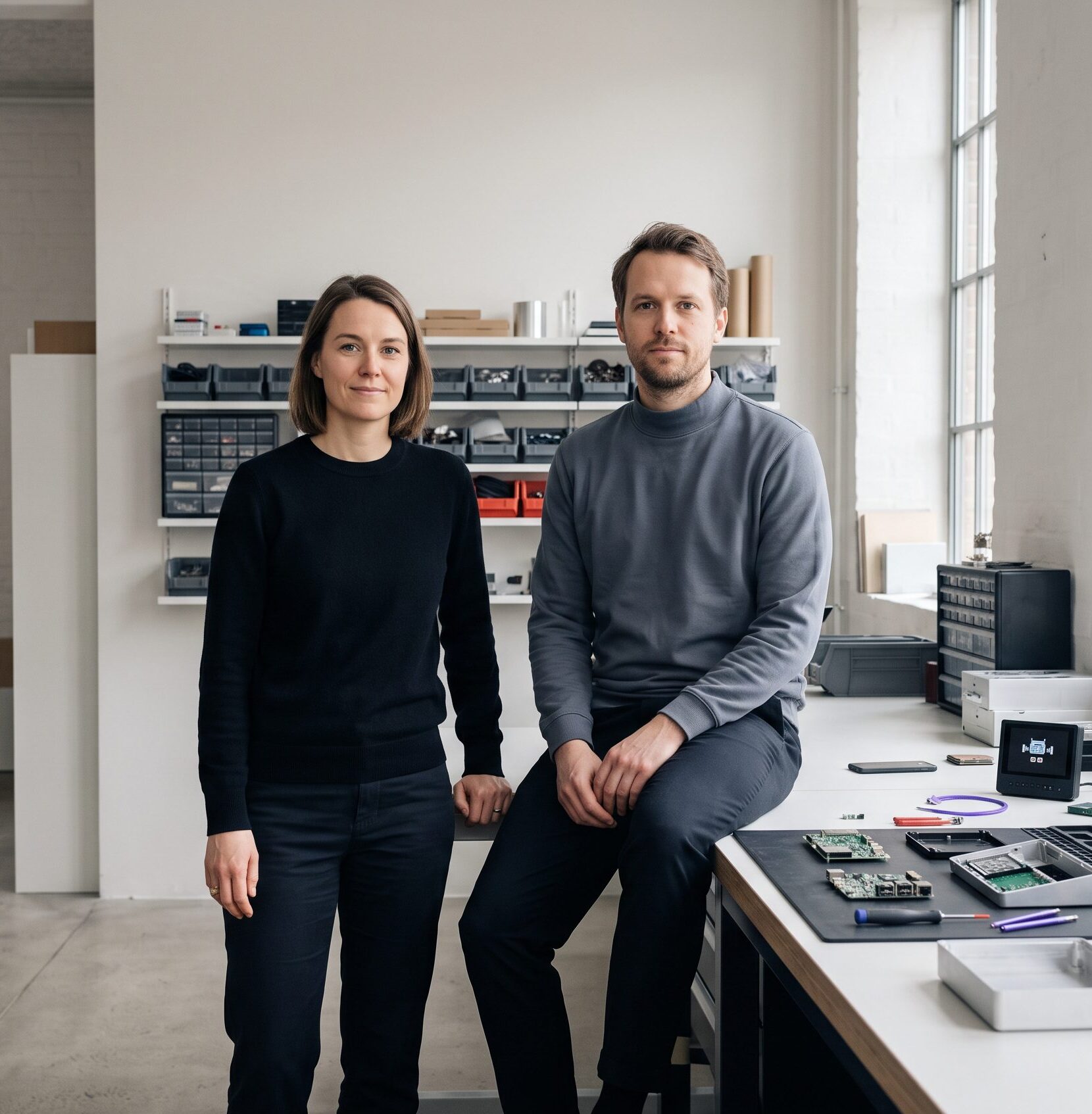
    DEUX Technologies makes simple devices for people who create. We are Mira and Jonas, two former developers who got tired of tools that ask for everything. So we started building the opposite: products that do one thing really well. If you have just heard of us, this page explains who we are, what we make and where to start. However, if you already know us, use the links below to go straight to what you are looking for.

    What is DEUX Technologies?

    DEUX Technologies is a company that designs and sells what we call dumb technology. Each product has one clear purpose and leaves out what distracts from it. Our customers are mostly creatives between 20 and 45: musicians, photographers, writers, designers and makers who know technology well and choose it carefully.

    What is dumb technology?

    We use the term dumb technology for technology that is simple on purpose.

    It is not worse. Instead, it does less, so you can do more. A tool that does one thing well is easier to understand, easier to trust and easier to keep.

    Where to start: find the right DEUX product

    Pick by what you want to do:

    1. Phones: DEUX One, One Mini, One Mono and One Core.
    2. Tablets: DEUX Tab, Tab Mini, Tab Draw and Tab Write.
    3. Computers: DEUX Book, Book 13, Book Studio, Desk, Desk Mini and Writer.
    4. Audio: DEUX Audio, Audio Mini, Headphones, Headphones Studio, Earphones and Speaker.
    5. Time and focus: DEUX Watch, Watch Mono and Timer.
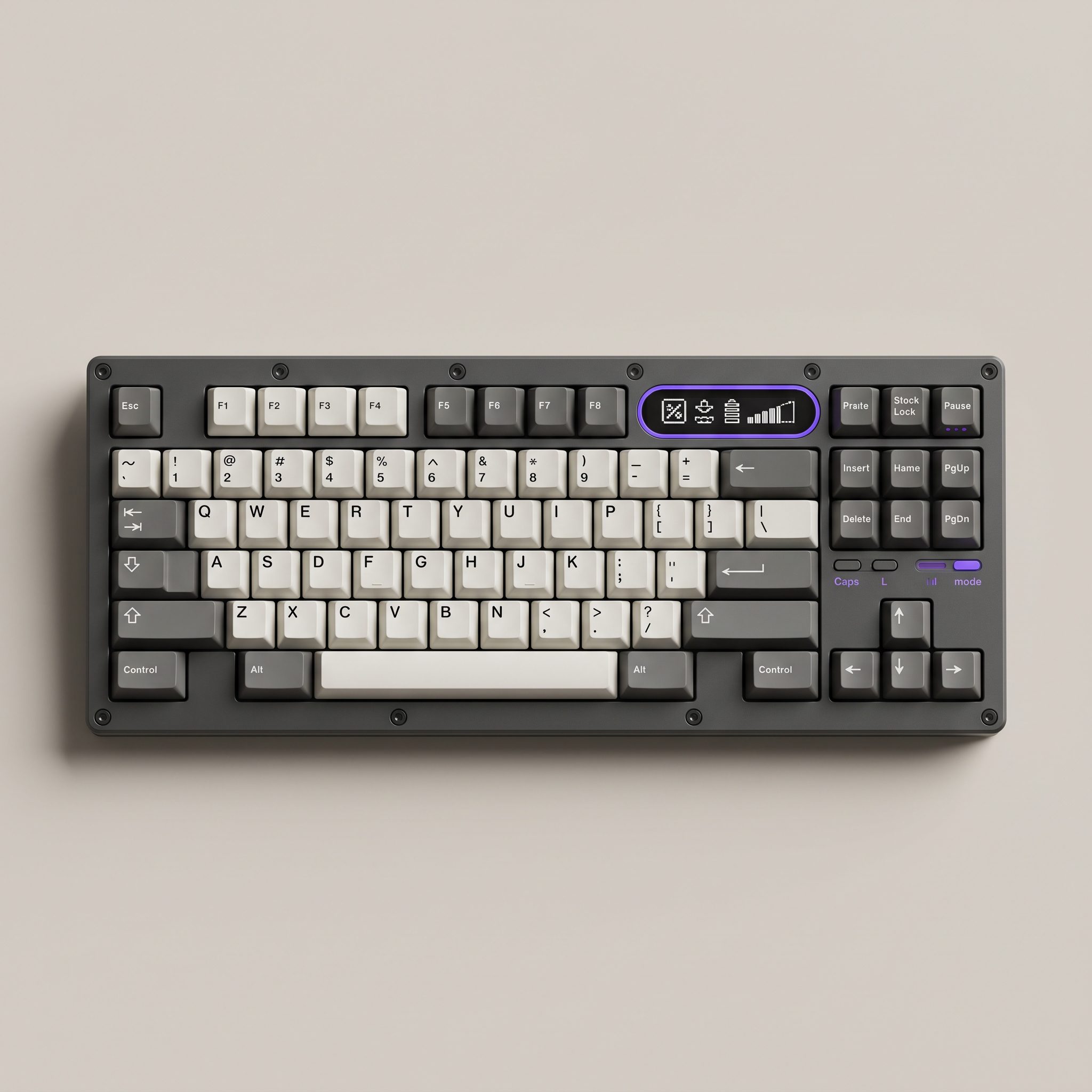
    6. Accessories and merch: Keyboard, Mouse, Pen, Notebook, Tee, Hoodie and Cap.

    Prices run from 199 kr. for the DEUX Notebook to 10,999 kr. for the DEUX Book Studio. We are not the cheapest, and we are not trying to be. Instead, we make things to be kept.

    Why we built DEUX

    We spent years building software, and we saw how much of it tries to hold your attention. Therefore, we wanted to build tools that give it back.

    We take inspiration from people like Dieter Rams, Cal Newport, Brian Eno and Jony Ive, and our values are simple: techy, elegant, simple, human and creative, with a little 8-bit in the soul. For example, you can see that influence in our pixel-D logo.

    Not sure where to begin? Shop by Purpose → Or read what the research says about screen time and focus.